Prosthetics and crowns
Zirconia crowns, porcelain-fused-to-metal work and all-ceramic E-max restorations.
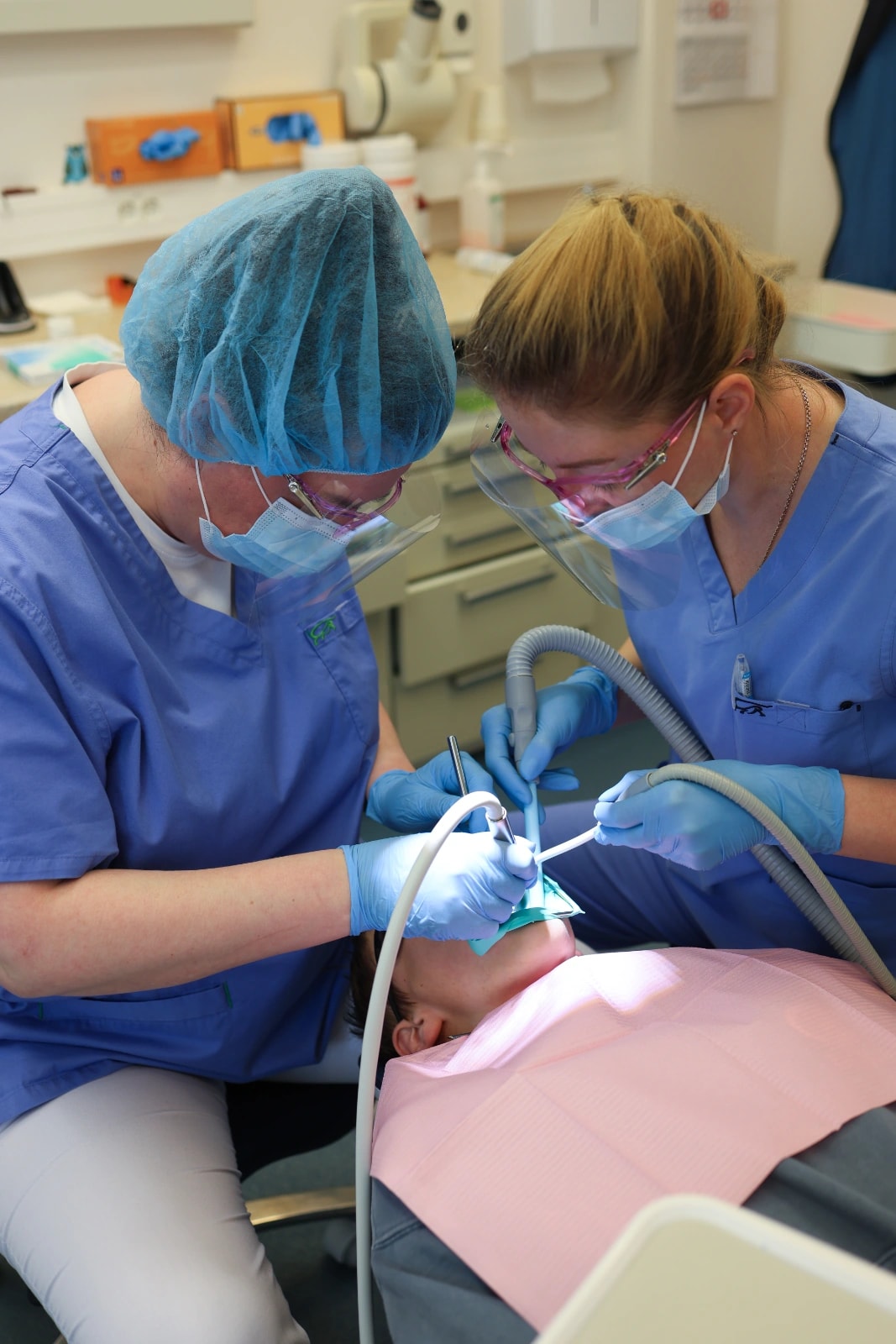
About the treatment
Prosthetic dentistry restores the beauty, brightness and correct shape of your smile even when the teeth are badly damaged.
We use a digital 3D scanner instead of conventional impression material. That lets us make zirconia crowns and all-ceramic E-max restorations accurate to the micron.
Zirconia crowns withstand maximum chewing load, while E-max ceramic gives the tooth back its natural translucency — neither can be told apart from natural enamel.
What the visit includes
- Zirconia and E-max
- Digital 3D scanning
- The natural gloss of enamel
- 260 € benefit for pensioners
When this procedure is needed
- More than half the tooth is gone — a filling will not hold on it.
- The tooth has had its nerve removed and become brittle: without a crown it will split under load.
- There is a chip or a crack on a back tooth.
- One or several teeth are missing and an implant is not possible for health reasons.
- An old crown has darkened at the edge, come loose or rubs the gum.
How the visit goes
- 1Examination and choice of restorationThe dentist assesses how much living tissue is left and suggests an option: an inlay, a crown or a bridge. The material decides both the price and how long it lasts.
- 2Preparing the toothThe tooth is shaped for the future restoration. If it has had its nerve removed and is badly damaged, a post-and-core is placed first.
- 3Impression and temporary crownA digital scan or a classic impression is taken. A temporary crown is fitted while the work is made: the tooth is protected and there is no gap in the smile zone.
- 4Try-in and fittingThe finished restoration is tried in, the fit and colour are checked, the bite is adjusted and it is cemented in place.
Prices for this service
- Porcelain-fused-to-metal crown520 €
- Zirconia crownfrom 520 €
- Crown on an implant590 – 1100 €
- Removable denture282 – 2 619 €
- Prosthodontist consultation and check-up50 €
- Taking an impressionfrom 20 €
- Fitting a removable denture50 €
- Co-Cr partial denturefrom 880 €
- Denture repairfrom 105 €
After the procedure
- For the first days the crown feels foreign — that is adaptation and it passes within a week.
- Do not crack nuts or ice and do not open packaging with your teeth: ceramic is strong but chips from a point impact.
- Take floss under the crown carefully, out to the side, rather than pulling it straight up — otherwise you can lift it off the cement.
- Come for a check-up once a year: the crown margin is where caries starts unnoticed.
Frequently asked questions
How long does the crown take to make?
Usually 7–10 days. A temporary one is fitted meanwhile, so you will not walk around with a prepared tooth.
How does zirconia differ from metal-ceramic?
Zirconia has no metal framework — it transmits light better and looks more natural in the smile zone. Metal-ceramic is cheaper and holds up well on back teeth.
Does the nerve have to be removed for a crown?
Not always. A living tooth lasts longer, so the nerve is removed only when there is a reason, not "just in case".
What should I do if a crown or bridge comes loose?
Do not push it back yourself and do not chew on that side — book a visit within a few days. Often the cement has simply washed out and the work can be fixed back in place. It is worse if decay has developed underneath or the root has cracked: then the scan decides. If the crown has come off whole, keep it and bring it with you.
Why does food get under my crown?
It means the edge of the crown no longer sits tight against the tooth, or a gap has opened between the crown and its neighbour. This does not settle by itself, and debris under the margin soon causes root caries, the worst kind there is. It needs looking at: sometimes re-cementing is enough, sometimes the crown is remade.