Splints and mouthguards (night, sports, joint)
Custom-made splints for bruxism (grinding) and protective sports mouthguards.
About the treatment
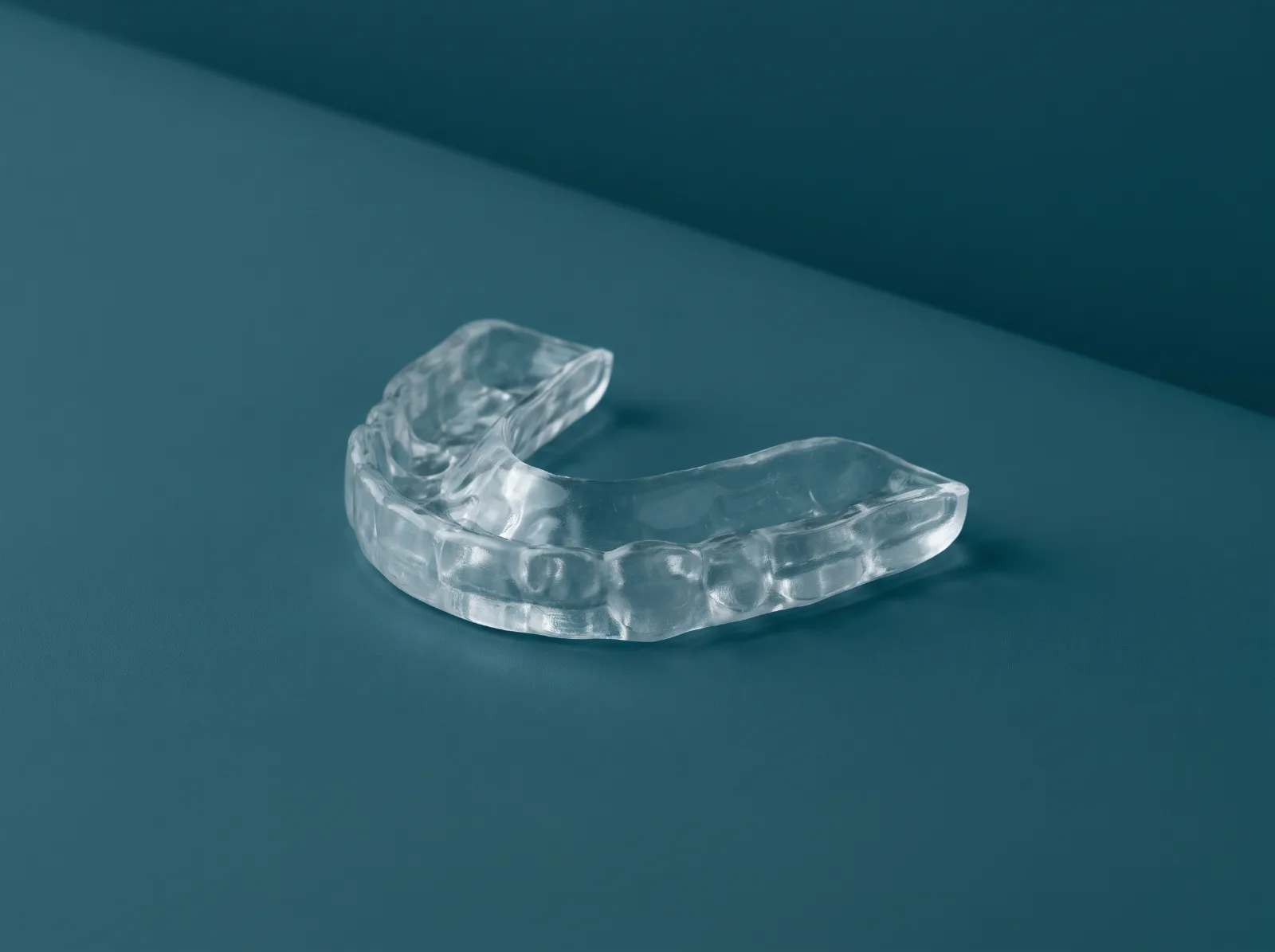
Custom-made protective and therapeutic splints, produced from a digital 3D scan of your jaws.
• Bruxism splints: protect the enamel from wear during night-time grinding and relieve the spasm in the chewing muscles. • Sports mouthguards: give maximum protection to the teeth and jaw joint from impact in boxing, hockey and martial arts. • Joint splints: treat TMJ dysfunction, remove clicking in the jaw and headaches.
What the visit includes
- Protection from tooth wear
- Sports mouthguards for impact
- Splints for joint pain
- Hypoallergenic material
When this procedure is needed
- Your jaw aches in the morning or your temples throb — a typical sign of night-time clenching.
- The biting edges of the teeth are worn and the enamel has gone translucent.
- You do contact sport: boxing, hockey, martial arts.
- The joint clicks or hurts when you open your mouth.
How the visit goes
- 1Examination and impressionThe dentist looks at the pattern of wear and the state of the joint, then takes an impression or a digital scan of both jaws.
- 2ManufactureThe splint is made in the laboratory from your individual model. Ready-made pharmacy versions do not account for your bite and can harm the joint.
- 3Fitting and adjustmentThe splint is fitted in place: it should come out without effort and spread the load evenly.
Prices for this service
- Bruxism splint, soft175 €
- Bruxism splint, hard212 €
- Sports mouthguard, clear175 €
- Sports mouthguard, coloured212 €
After the procedure
- Rinse the splint in cool water as soon as you take it out, and clean it once a week with a brush and soap.
- Keep it in a case with holes — a closed box traps moisture and starts to smell.
- Do not wash it in hot water or boil it: the plastic warps and the splint stops fitting.
- Bring the splint to your routine check-up — the dentist will see how it is wearing and whether the bite has shifted.
Frequently asked questions
Why is a pharmacy splint worse than a made one?
It does not account for your bite. A splint that sits wrongly overloads the joint and makes things worse, not better.
How do I know I clench my teeth at night?
Morning pain in the jaw and temples, worn tooth edges, tooth imprints along the side of the tongue. The grinding itself is heard by the people around you, not by you.
How long does a splint last?
A year or two with daily wear. Bring it to your routine check-up — the dentist will spot the wear before it stops protecting you.