Surgery and extractions
Atraumatic extraction of any complexity (including wisdom teeth) and gum surgery.
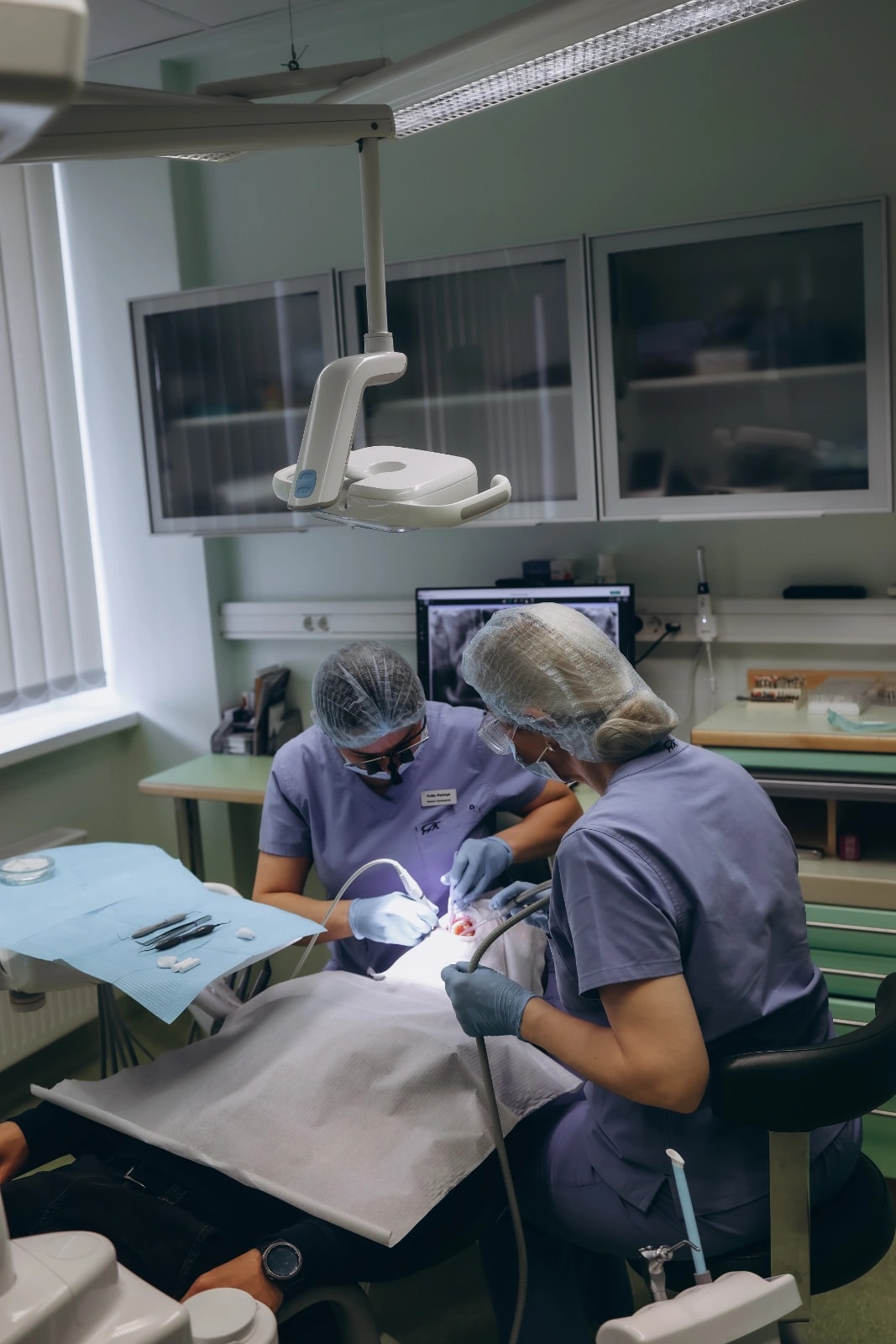
About the treatment
Our surgical department carries out atraumatic extractions of any complexity, including impacted and misaligned wisdom teeth.
The guiding principle of our surgery is to preserve as much of the alveolar bone as possible. That means the socket heals quickly and painlessly and creates ideal conditions for a future implant.
We also perform gum surgery, tooth-preserving operations, root-end resections and bone grafting (sinus lift).
What the visit includes
- Atraumatic bone preservation
- Removal of difficult wisdom teeth
- Follow-up check after the extraction
- Treatment under sedation
When this procedure is needed
- The tooth is so damaged by caries that there is nothing left to rebuild.
- There is inflammation or a cyst at the root that cannot be treated through the canals.
- A wisdom tooth presses against its neighbour and destroys it from the side.
- The tooth erupted crooked and constantly injures the cheek or tongue.
- The tooth is in the way of braces or of preparing a site for an implant.
- The gum around an unerupted tooth becomes inflamed again and again.
How the visit goes
- 1Examination and X-rayThe dentist looks at the position of the roots on a targeted or panoramic X-ray and chooses the approach in advance. Complex cases are planned from a 3D scan.
- 2AnaesthesiaThe anaesthesia is matched to the scale of the work. If a dental visit causes strong fear, the extraction is done under sedation.
- 3The extractionA simple tooth comes out whole. A difficult one is divided and removed in fragments — that way the walls of the socket stay intact and the site for a future implant is not lost.
- 4Cleaning the socketThe socket is cleaned and rinsed. If needed, self-dissolving sutures are placed — they do not have to be removed.
- 5Advice and follow-upThe dentist explains what to do in the first 24 hours and sets a date for the follow-up check.
Prices for this service
- Extraction of a single-rooted tooth73 €
- Extraction of a two-rooted tooth88 €
- Extraction of a multi-rooted tooth100 €
- Wisdom tooth extraction120 €
- Surgical extraction170 €
- Extraction of an impacted tooth220 €
- Root-end resection (apicoectomy)550 €
- Suturing35 €
- Suture removal, drain change20 €
- Single-use surgical materials40 €
Treatment covered by Tervisekassa
For patients with a confirmed severe disability or special mental health needs, and for children up to 19 (where indicated), Tervisekassa covers this treatment — you pay nothing at the clinic. Ask reception what applies in your case.
After the procedure
- For the first 24 hours do not touch the socket with your tongue and do not rinse: the blood clot closes the wound and protects the bone.
- Eat soft, cool food and chew on the other side.
- No smoking or alcohol for a day — both stop the socket from healing.
- No sauna, gym or heavy exertion for two or three days.
- From the second day use antiseptic mouth baths if the dentist prescribed them: take the solution, hold it and spit it out without rinsing.
- If on the third day the pain grows, your temperature rises or the swelling increases, call the clinic — do not wait for the scheduled check.
Frequently asked questions
Does it hurt to have a tooth out?
The procedure itself is done under anaesthesia — you feel pressure, not pain. The unpleasant part comes later, as the anaesthesia wears off; the dentist will tell you in advance what to take.
How long does the socket take to heal?
The gum closes in 7–10 days, the bone reshapes over several months. An implant can usually be planned after two or three months.
Can a tooth be extracted during pregnancy?
Yes, if there is a reason and it cannot wait. The second trimester is the calmest. Do tell us how far along you are before the appointment — the choice of anaesthesia depends on it.
Do wisdom teeth always have to come out?
No. If the tooth has come through straight, takes part in chewing and can be cleaned, it stays. It is removed when it lies at an angle and presses on its neighbour, when the flap of gum over it keeps getting inflamed, or when a brush cannot reach it and decay keeps coming back. The scan decides, not the fact that it is a wisdom tooth.
What should I rinse my mouth with after an extraction?
With nothing — and that is the main point. Rinsing washes the clot out of the socket, and without it healing takes longer and hurts more. For the first day leave the mouth alone entirely. From the second day, if the dentist has prescribed it, use a bath instead: take the solution in, hold it and let it flow out without moving your cheeks.